
If you are new to sourcing denim, the first challenge is not price—it is navigating the many denim fabric types that all look similar on a swatch card but behave very differently in production. A buyer who confuses a rigid 13 oz twill with a 10 oz stretch can end up with garments that fail wash tests, shrink out of spec, or simply feel wrong in hand. This guide maps the main types of denim fabric by construction, finish, and stretch, then gives you a practical framework for matching each one to a product. We keep the language plain on purpose: you do not need to be a textile engineer to source well, but you do need to know which questions to ask.
What Are Denim Fabric Types?
Denim fabric types are categories of cotton-based twill cloth distinguished by weave, yarn dyeing, selvedge construction, stretch content, and finish. The classic form uses indigo-dyed warp yarns crossed with undyed weft in a 3/1 twill. From that base, mills branch into raw, washed, selvedge, stretch, non-stretch, and specialty variants. Each type is defined by measurable traits—weight in ounces, elastane percentage, and residual shrinkage—not by marketing names, so always specify the technical parameters when you inquire.
Why Denim Fabric Types Matter for B2B Buyers
Choosing among denim fabric types is a cost decision as much as a design one. Weight drives both material cost and freight; stretch content affects pattern grading and sewing setup; finish determines how much shrinkage you must allow for. A mismatch at the fabric stage multiplies through cutting, sewing, and washing. For brands, the right type protects fit consistency across repeat orders. For wholesalers, it determines how easily a fabric moves in the market. Treat the selection as a specification exercise, not a aesthetic preference.
Key Types of Denim Fabric
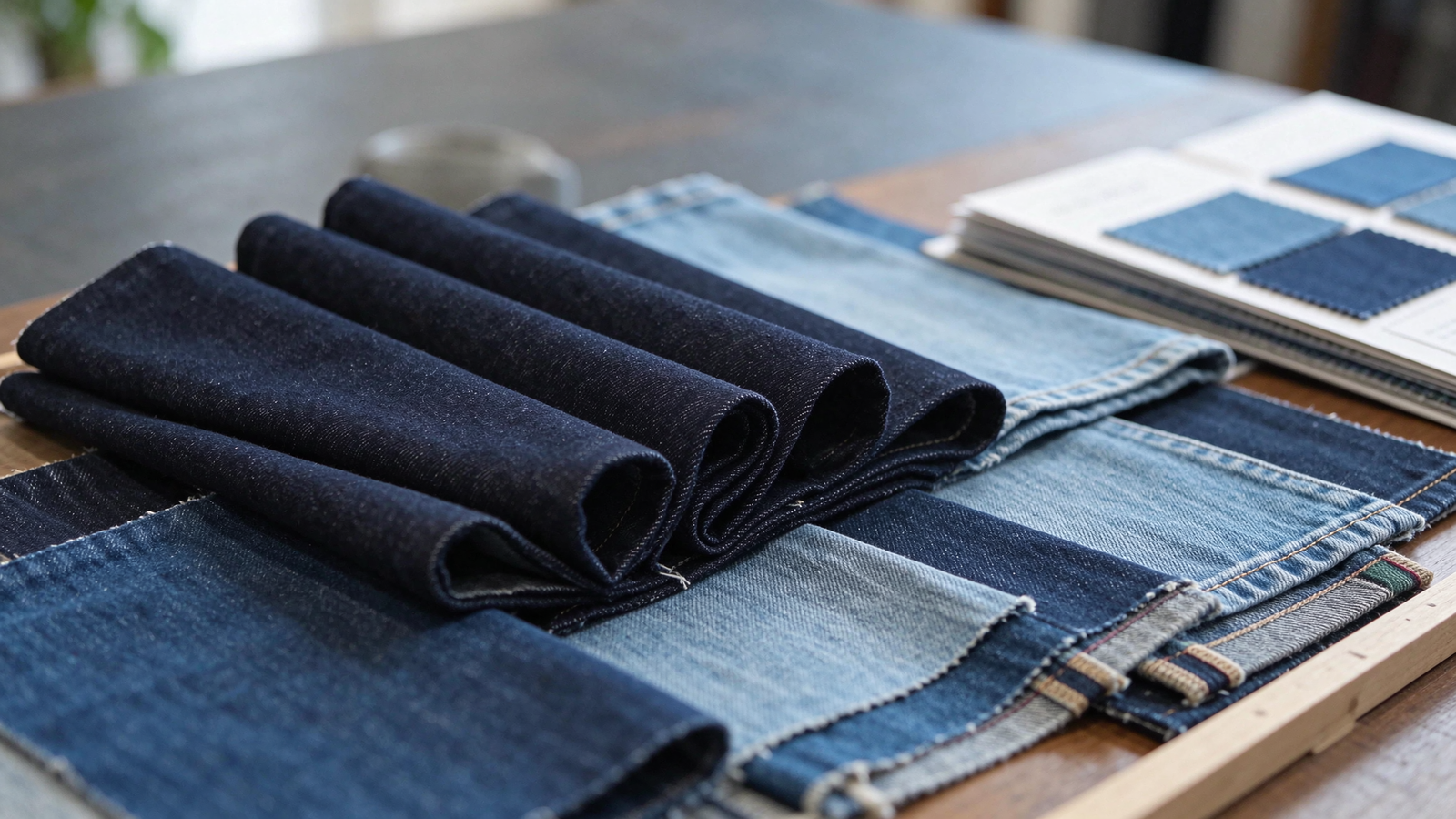
Assorted denim fabric types laid out on a buyer’s table
Raw and Dry Denim
Raw denim is woven and dyed but not pre-washed. It typically arrives with loom-state stiffness and a measurable residual shrinkage—often quoted in the 3–10% range for unsanforized cloth. Buyers choose it for authenticity and for the personalized fade that develops with wear. The trade-off is that you must manage first-wash fit and communicate shrink behavior to your customer.
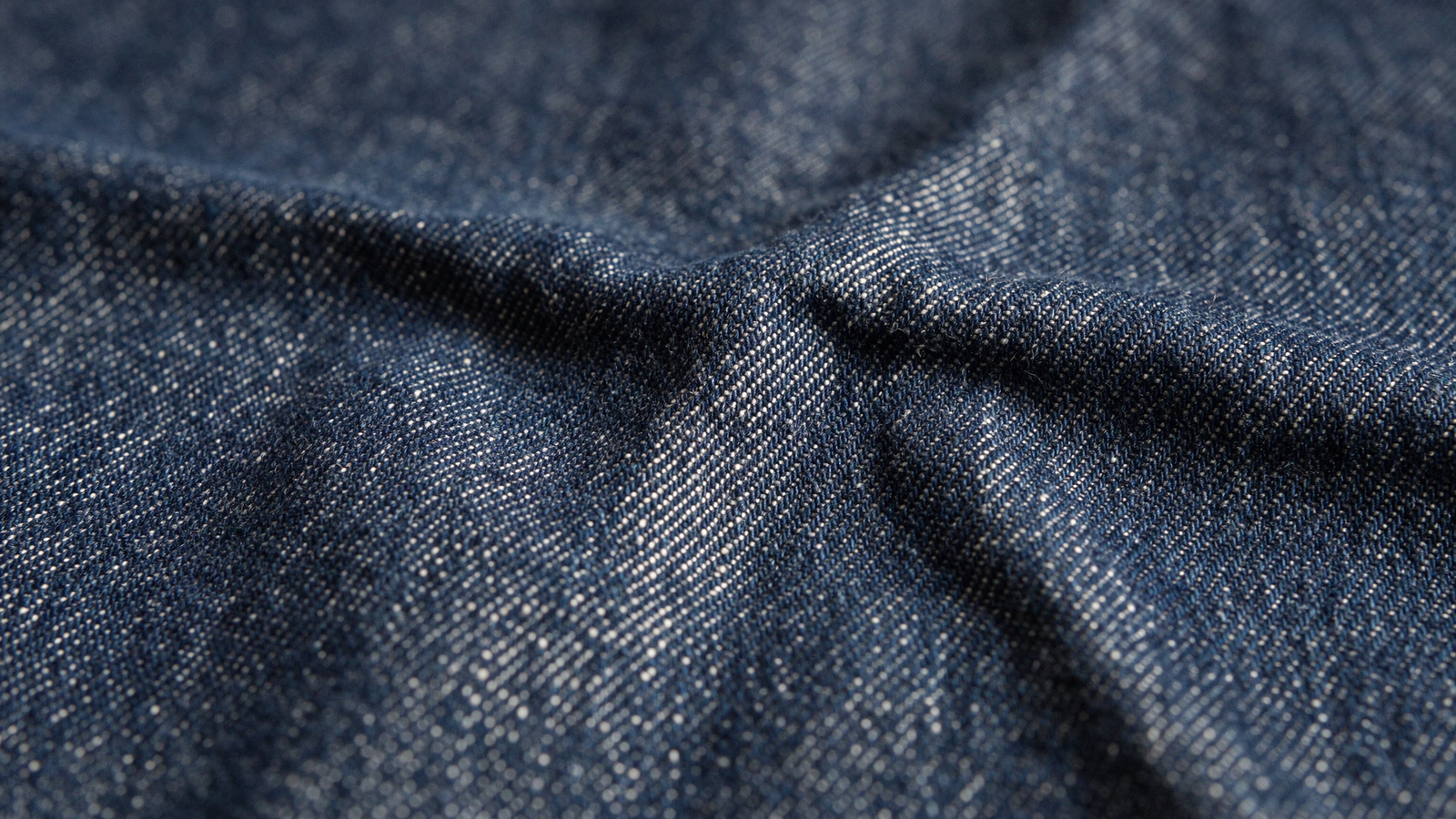
Close-up of raw dry denim 13 oz twill weave
Washed and Finished Denim
Washed denim has undergone stone, enzyme, or ozone processes to soften the hand and preset the color. It is easier to work with because shrinkage and stiffness are largely controlled. Enzyme washes, for example, reduce surface fibrils and give a cleaner, smoother face. If your customer expects a consistent, ready-to-wear feel out of the box, washed fabric types are the safer route.
Selvedge Denim
Selvedge denim is woven on narrow shuttle looms that produce a self-finished edge, usually with a colored “redline” ID. The cloth is typically 28–30 inches wide, compared with 58–60 inches for wide looms. The narrow width raises waste and cost, which is why selvedge carries a premium. Dive into our guide to selvedge denim explained for the loom mechanics behind that edge.
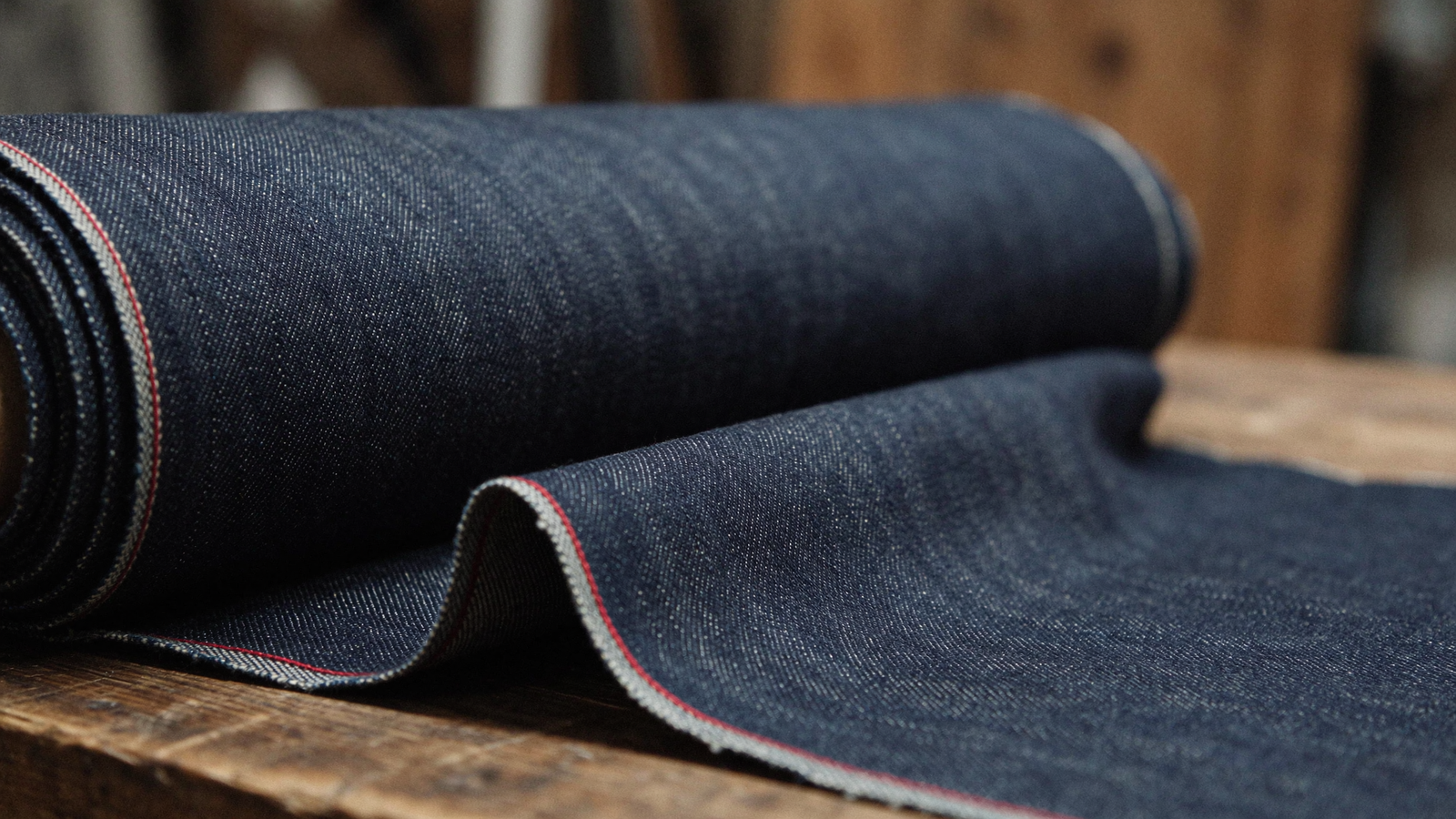
Selvedge denim redline edge on a shuttle-loom roll
Stretch Denim
Stretch denim blends a small share of elastane—commonly 1–3%, occasionally up to 4–5%—into the weft or warp. It improves comfort and recovery, which is why it dominates skinny and slim silhouettes. The added elastic complicates shrinkage control and requires careful heat-setting during finishing. See stretch denim fabric for the full classification.
Non-Stretch and Rigid Denim
Non-stretch denim contains no elastane. It holds a clean, structured silhouette and is favored for straight-leg jeans, jackets, and workwear. Rigid cloth gives a crisp hand and pronounced creasing over time. Our non-stretch denim fabric guide covers feel and fit selection in detail.
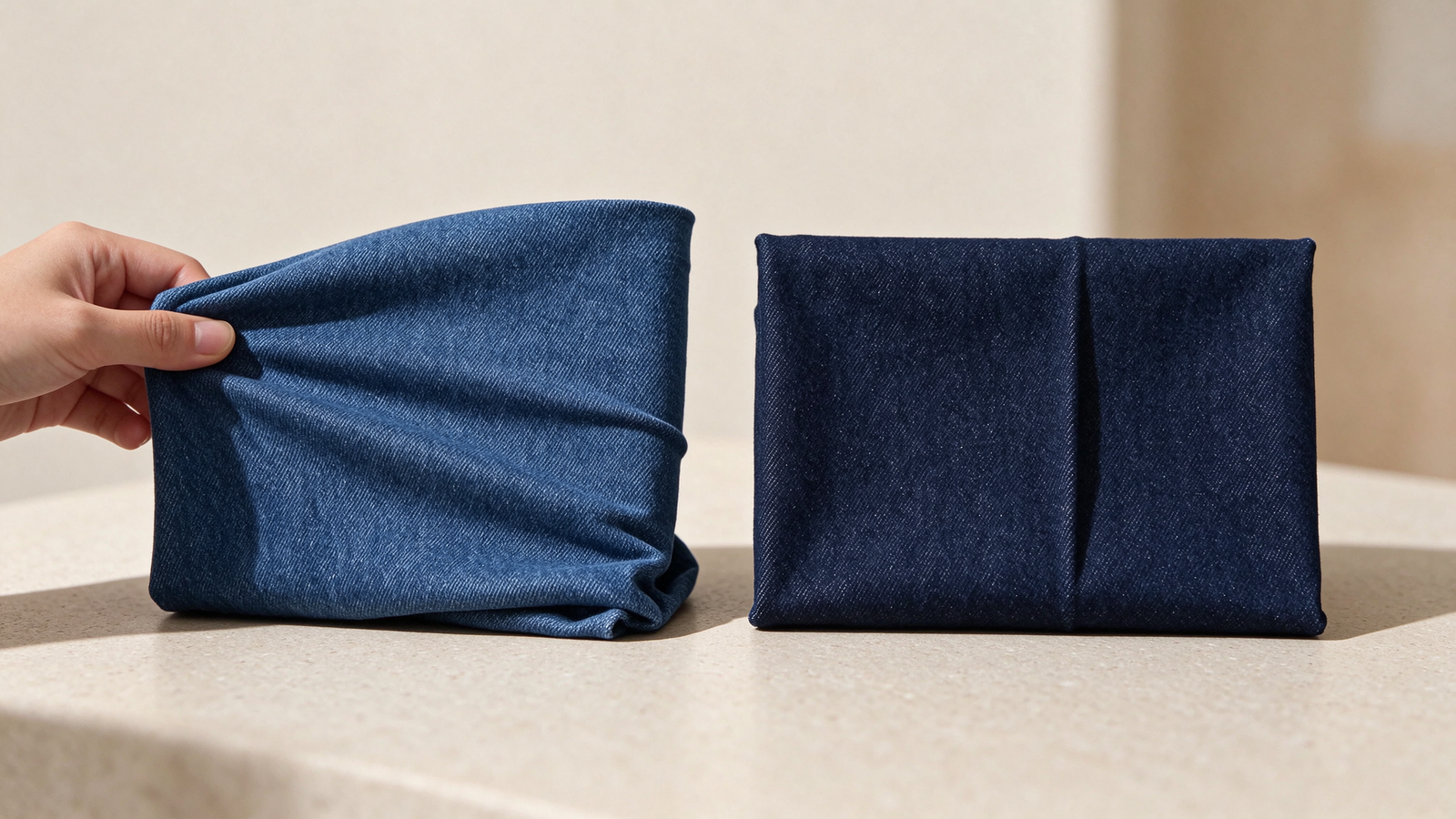
Stretch vs non-stretch denim swatch comparison
How the Main Denim Fabric Types Are Made
Every denim fabric type discussed above starts from the same short chain: yarn preparation, dyeing, weaving, and finishing. Understanding that chain helps you read a supplier’s spec sheet, because most differences between types are introduced at one specific stage.
- Yarn preparation.Cotton is spun into yarn, typically ring-spun for premium cloth or open-end for volume programs. Ring-spun yarn gives a softer, more irregular surface; open-end yarn is more uniform and economical. Stretch types add an elastane filament at this stage, usually wrapped in cotton as a core-spun yarn.
- Dyeing. Indigo is applied to the warp yarns while the weft stays undyed, which is why the face of the cloth is blue and the back is pale. Most denim is rope-dyed or slant-dyed; the route affects depth of shade and how the fabric fades. Black and colored denim use different dye chemistries. For the full picture, see the denim weaving process and the dyeing guide linked earlier.
- Weaving. The dyed warp and undyed weft are interlaced, most often in a 3/1 right-hand twill that gives denim its diagonal ridge. Narrow shuttle looms produce selvedge; wide rapier or air-jet looms produce the broad cloth used in most volume programs.
- Finishing. This is where residual shrinkage, hand, and appearance are set. Sanforization controls shrink; enzyme, stone, or ozone washes soften the cloth and shift color. Fabric described as “raw” has skipped the wash stage, while “washed” denim has passed through it.
Because each stage adds cost, a type with more steps—selvedge weaving, or stretch yarn plus heat-setting—will price differently from a plain wide-loom cloth of the same weight. Ask which stages are included in a quote before you compare numbers.
Reading a Denim Type on a Spec Sheet
A line such as “12.5 oz 98/2 cotton/elastane, 3/1 right-hand twill, sanforized” packs several type decisions into one string. Learning to decode it prevents most sourcing mistakes. Weight tells you the fabric family and roughly how it will drape. Composition tells you whether the cloth is stretch or rigid and how much give to expect; 2% elastane is a common comfort-stretch level. Weave describes the diagonal structure, with 2/1 twill or plain weave looking and behaving differently. Finish tells you the shrinkage to plan for; an “unsanforized” label means you must allow for considerably more shrink. When a spec omits one of these fields, ask for it. If a supplier describes a fabric only by a marketing name, request the numeric equivalent.
Matching Denim Fabric Types to Your Customer
Different buyers value different traits. Apparel brands usually prioritize consistency across repeats—shade, shrinkage, and hand must stay stable—so mid-weight stretch or washed non-stretch often fits, and a documented lab dip matters more than a dramatic first sample. Wholesalers and distributors care about breadth and speed; in-stock cloth in widely accepted weights moves faster than specialty narrow-width fabric. Designers and small labels often want distinctive character—selvedge edges, raw denim, unusual weights—and can accept longer lead times. If you are building a full line rather than a single style, the planning notes in denim fabric for clothing brands complement this view. Whichever segment you serve, write the chosen type into your spec as measurable values so every supplier quotes the same fabric.
How to Choose the Right Denim Fabric Type
Work backwards from the garment. A structured jacket calls for a heavier, non-stretch cloth; a slim jean needs controlled stretch and recovery. The table below is a starting reference—confirm actual values with your supplier, since ranges vary by mill.
| Type | Typical Weight | Stretch | Common Use | Key Buyer Check |
| Raw / dry | 12–15 oz | None | Heritage jeans | Residual shrinkage |
| Washed | 8–13 oz | None or low | Ready-to-wear jeans | Wash fastness |
| Selvedge | 11–15 oz | None | Premium jeans | Narrow width yield |
| Stretch | 8–12 oz | 1–3% elastane | Slim / skinny jeans | Recovery & heat-set |
| Non-stretch rigid | 10–14 oz | None | Straight jeans, jackets | Hand feel & drape |
For weight conversions and garment matching, see the denim fabric weight guide. Weight is the single most cited parameter in a first inquiry, so get comfortable with ounces and GSM before you request quotes.
Common Mistakes to Avoid
- Selecting by looks alone. A swatch tells you color and texture, not shrinkage or recovery. Always request a test report or run a small in-stock trial before committing to bulk.
- Ignoring width and yield. Narrow selvedge may price higher per meter but also produces fewer panels per meter. Calculate cost per garment, not per meter.
- Skipping wash validation. Stretch and washed fabrics can behave very differently after one industrial wash. Confirm shrinkage and color fastness with a lab dip first.
- Assuming all indigo is the same. Dye route affects depth and fade character. For background, see our note on indigo dyeing process.
How to Verify a Fabric Type Before Bulk
A fabric type on a label is a claim until you test it. Ask for a spec sheet with weight in both ounces and GSM, composition, weave, and finishing route. Then confirm three behaviors on a physical sample: stretch recovery if elastane is present, residual shrinkage after one controlled wash, and color fastness to rubbing. A simple burn or pull test can suggest fiber content, but rely on a lab report for anything contractual. Keep an approved swatch from each accepted lot so a later order can be compared against something real rather than a description. This discipline matters most when sourcing across borders, where a fabric name may translate loosely. Treat the type as a starting hypothesis and the sample as the evidence.
Frequently Asked Questions
- What is the most common denim fabric type in the market? The most widely used is 3/1 right-hand twill denim in the 10–13 oz range, often with 1–2% elastane for jeans. It balances durability, cost, and comfort, which is why it dominates mainstream denim programs.
- How do I tell stretch from non-stretch denim? Check the composition label for elastane, typically 1–3%. In hand, stretch fabric recovers after pulling; rigid denim keeps a crease. For a bulk order, rely on the spec sheet rather than a hand feel test.
- Is selvedge denim always better quality? No. Selvedge describes the finished edge and narrow loom, not an automatic quality grade. It does signal a slower weaving method and usually a higher price, but you still need to judge yarn, weight, and finish.
- What weight denim is best for jeans? Mid-weight 10–13 oz is the general standard for year-round jeans. Lighter 5–8 oz suits warm-weather styles; heavier 14 oz and above targets heritage or winter products. Confirm GSM equivalents with your mill.
- Can one garment combine several denim fabric types? Yes, though it is uncommon in bulk. Some premium styles pair a selvedge body with a stretch waistband, or a raw shell with a washed pocketing fabric. Mixing types raises sewing and wash complexity, so validate the combination as a single garment before scaling.
Conclusion
The main denim fabric types—raw, washed, selvedge, stretch, and rigid—are best understood as a set of technical choices rather than fashion labels. Start with garment type, fix weight and stretch range, then validate shrinkage and color with a sample. If you would like a lab dip or a specific spec, reach us